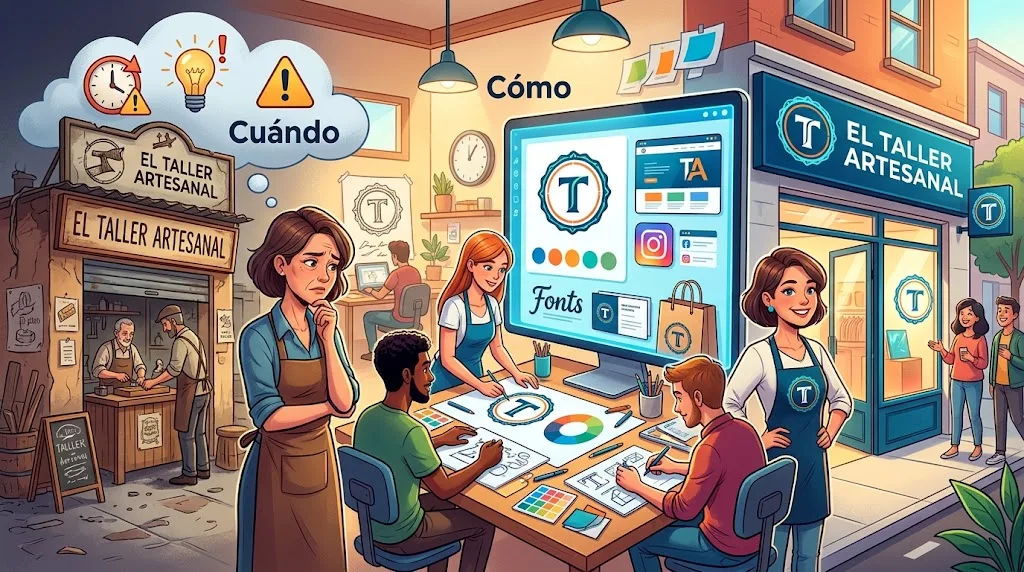
Business rebranding isn't just a new logo—it's a strategic shift that happens when your current image no longer matches who you serve or how you operate. Many small business owners wait too long, worried that any change will confuse loyal customers or erase years of recognition. But outgrowing your brand is normal: your services expand, your customer base shifts, or your original name and colors start to feel outdated next to competitors. The good news is that business rebranding doesn't have to mean starting from zero. With the right process, you can refresh your identity while keeping the trust you've already built.
Signs Your Business Has Outgrown Its Current Brand
Rebranding decisions should be based on real friction points, not boredom with your own logo. Watch for these common signals:
- Your business name no longer reflects what you actually sell (you started as a repair shop and now offer full installations, for example).
- You're attracting the wrong type of customer, or missing the audience you actually want to serve.
- Your visuals look dated compared to competitors who launched more recently.
- You've merged with another company, added a location, or expanded into a new city or state.
- Your logo, colors, and messaging are inconsistent across your website, signage, and social profiles.
- Customers or staff regularly describe your business differently than how you describe it yourself.
If two or three of these sound familiar, it's worth taking business rebranding seriously as a planned project rather than a reactive scramble.
Full Rebrand vs. Brand Refresh: Which Does Your Business Need?
Not every business needs to change its name or start over. Understanding the difference helps you avoid overcorrecting.
Full Rebrand
A full rebrand usually involves a new name, new logo, new color palette, and a repositioned message. This level of change makes sense after a merger, a major shift in services, or when the old brand carries negative associations you can't shake. It's the more disruptive option and requires the most careful communication with existing customers.
Brand Refresh
A brand refresh keeps your name and core identity but updates the visuals, tone, and messaging to feel current. This is the right move for most small businesses that have simply grown, modernized their offerings, or need their online presence to match the quality of their in-person service. A refresh is lower risk and easier to roll out gradually.
How to Rebrand Without Losing Existing Customers
The biggest fear around business rebranding is alienating the people who already trust you. A structured approach reduces that risk significantly.
Start With an Honest Audit
Before changing anything, list every place your current brand appears: website, Google Business Profile, social media, signage, invoices, email signatures, packaging. Note what's inconsistent and what's actually working. Ask a handful of regular customers what comes to mind when they think of your business—their answers often reveal what to keep and what to change.
Protect the Elements Customers Recognize
If your business name, a specific color, or a tagline is strongly associated with you, consider keeping it even as other elements evolve. A rebrand that preserves one or two recognizable anchors feels like an upgrade rather than a replacement.
Plan a Phased Rollout
Avoid changing your logo, website, signage, and social accounts all on the same day. Sequence the rollout: update your website and Google Business Profile first, then social media, then physical materials like signage and business cards as supplies run out naturally. This phased approach limits confusion and spreads out the cost.
Tell Your Story Before You Show the New Look
Send an email or post an announcement explaining why the change is happening before customers stumble onto it. A short, honest explanation—new services, a growing team, an updated look that matches how far you've come—goes a long way toward keeping loyalty intact during a business rebranding effort.
Rolling Out the New Brand Across Your Channels
Once the new identity is approved internally, consistency across every touchpoint matters more than perfection in any single one. Work through this checklist over several weeks:
- Update your website header, footer, and About page with new logo, colors, and messaging.
- Update your Google Business Profile name (if changed), photos, and description.
- Replace profile images and cover photos across all active social media accounts.
- Update email signatures for everyone on the team.
- Order new business cards, signage, and printed materials as current stock is used up.
- Redirect any old web pages or URLs if your domain or page structure changes, so existing links and bookmarks still work.
- Notify partners, vendors, and directory listings (chambers of commerce, industry associations) of the update.
Keeping this list visible to your team helps prevent the common problem of a half-finished rebrand, where the new logo appears on the website but the old one still shows up on invoices or delivery vehicles.
Common Rebranding Mistakes to Avoid
Many small business rebranding efforts stall or backfire because of avoidable missteps:
- Changing everything at once. A sudden, total overhaul can feel jarring to loyal customers who built trust around the old look.
- Skipping customer communication. Silence invites confusion; a brief explanation prevents it.
- Ignoring SEO continuity. If your domain, business name, or URL structure changes, old search rankings and backlinks can be disrupted without proper redirects and updated listings.
- Leaving internal teams out of the loop. Staff should understand the new brand story before customers ask them about it.
- Rebranding without a clear reason. Change for its own sake rarely resonates; customers respond better when the new look reflects a real shift in the business.
A thoughtful, well-communicated rebrand can modernize how your business is perceived without erasing the reputation you've spent years building.
Moving Forward With Confidence
Business rebranding works best as a deliberate project with a clear reason, a realistic timeline, and a plan for keeping customers informed along the way. Whether you need a full overhaul or a simple refresh, the goal is the same: make your business look and sound like who you actually are today, without losing the people who already trust you.
If you're weighing a rebrand and want a second opinion on timing, messaging, or rollout, the team at Best Deal Ever Lucifuge can help you plan a brand update that protects your existing customer relationships while positioning your business for what's next.