Think of Google as the world's pickiest customer. Before it recommends your business to millions of searchers, it wants proof that you're the real deal.
That’s where E-E-A-T comes in — Google’s way of separating genuine experts from wannabes. In 2026, it matters more than ever for your bottom line.
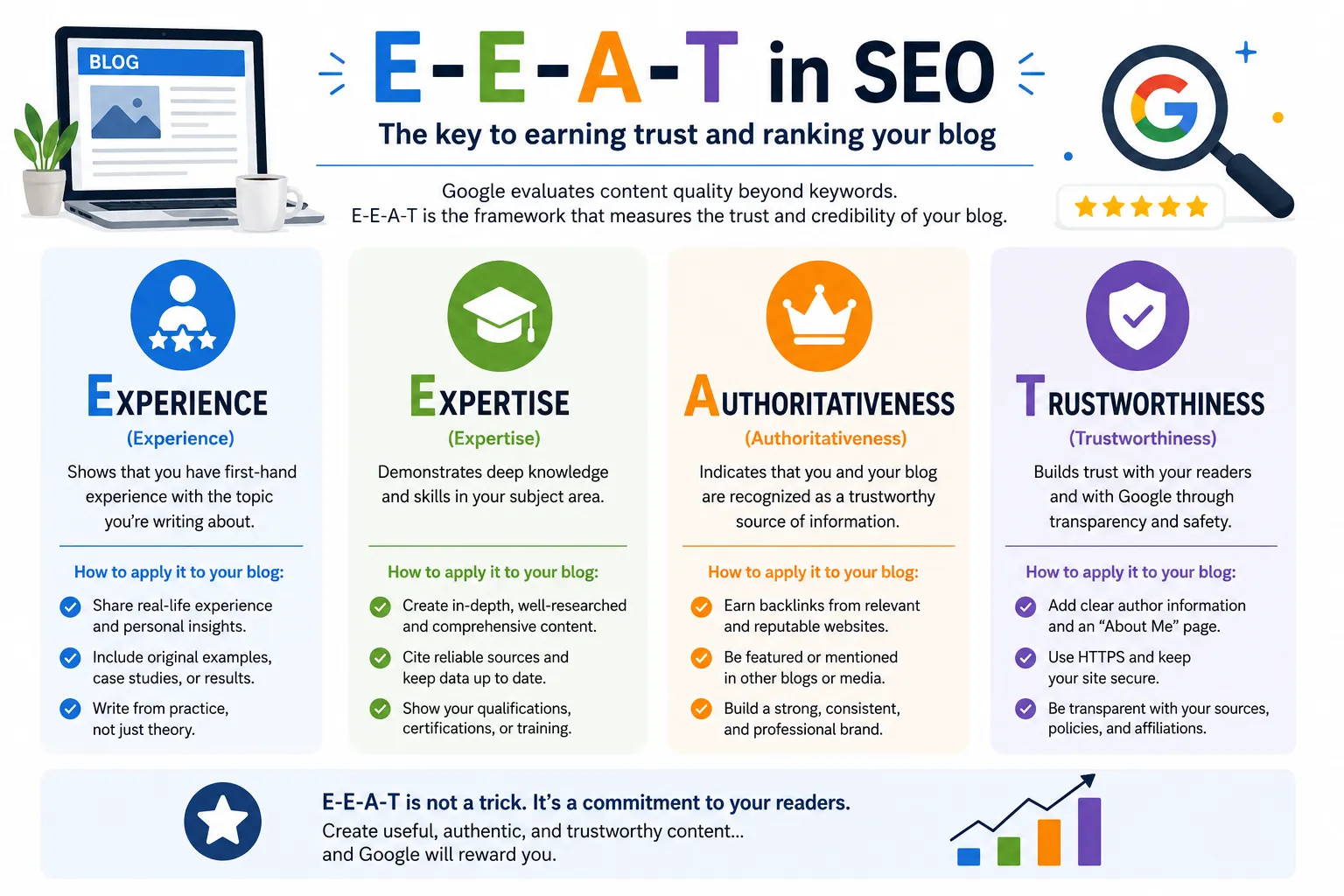
E-E-A-T stands for Experience, Expertise, Authoritativeness, and Trustworthiness.
But forget the acronym for a second. What this really means is simple:
Google wants to send customers to businesses that know their stuff, have done the work, and won’t let people down.
If you can prove you're that business, you'll see more traffic, more leads, and ultimately more revenue — all without paying for every single click.
The Money-Making Power of Real Expertise
Why Google Rewards Genuine Knowledge
Google’s business model depends on one thing: giving searchers exactly what they want.
When someone searches for “best criminal defense lawyer” or “how to fix a leaking roof”, Google’s reputation is on the line with every result.
That’s why it has become obsessed with real experts, not just websites that know how to stuff keywords.
What this means for your business:
Demonstrating genuine expertise isn’t just good for reputation — it’s a direct path to free, high-quality traffic.
For example, a local accounting firm started publishing detailed tax guides written by its CPAs. Within six months:
- Traffic grew from 500 to 15,000 monthly visitors
- 40% of visitors converted into consultation requests
Instead of trying to game the system, they simply shared what they already knew.
The financial impact was huge:
While competitors spent $50–$100 per click on Google Ads for terms like “tax preparation services,” this firm began getting the same traffic for free.
That’s around $75,000 in monthly ad value saved — and unlike ads, organic traffic keeps coming without ongoing payments.
Building Expertise Signals That Convert
Showing expertise doesn’t mean writing academic papers. It means:
Proving you’ve solved real problems hundreds of times before.
A plumber writing “7 Signs Your Water Heater Will Fail This Winter” based on 20 years of emergency calls will always outperform generic content.
Key strategies:
- Document real-world experience
- Use real photos, data, and case details
- Be specific instead of generic
For example:
Instead of “How to Choose a Lawyer”, write:
“What Happens in Your First DUI Court Appearance in Miami-Dade County”
That level of detail builds trust with users and signals real experience to Google.
Authority: Your Digital Reputation Bank Account
Why Other Websites Voting for You Matters
Authority is like your business credit score in Google’s eyes.
Google looks at who is talking about and linking to your website before deciding to trust you.
But in 2026, quality matters more than quantity.
A single mention from a leading industry publication can outweigh 100 low-quality backlinks.
For example, a cybersecurity firm featured in a major tech publication saw:
- 300% increase in organic traffic
- $2M in enterprise contracts
All from one authority signal.
Authority isn’t about shortcuts — it’s about becoming a reference point in your industry.
Creating Content Others Can’t Ignore
The fastest way to build authority is to create content others must reference.
Examples:
- A real estate agency publishing quarterly market reports
- A roofing company creating a storm damage checklist used by insurers
- A marketing agency publishing original ad cost research
These are not just blog posts — they are linkable assets.
Over time, authority compounds:
- Media outlets quote you
- Industry sites reference you
- Speaking opportunities appear
- Competitors start following your work
This creates a self-reinforcing growth loop.
Trust: The Conversion Multiplier
Why Trust Beats Traffic Every Time
Traffic means nothing without trust.
Trust is what turns visitors into customers.
In 2026, websites with strong trust signals can see conversion rates 3–4x higher.
For example, a medical practice had strong rankings but low conversions. The problem:
- No doctor bios
- No certifications shown
- No patient reviews
- Generic stock photos
After improving trust signals:
- Conversion rate increased from 0.5% to 4.5%
Same traffic. 9x more patients.
Building Trust That Google and Users Recognize
Start with basics:
- Real address and phone number
- Team photos (not stock images)
- Certifications and licenses
- Transparent About page
Example:
A landscaping company added a “Meet the Team” page and saw a 40% increase in quote requests.
Reviews also matter:
- Recent reviews
- Detailed feedback
- Platform-verified sources
Advanced trust strategy:
Address objections directly
Example:
An HVAC company created a page titled:
“Why HVAC Repairs Cost So Much (And How We Keep Prices Fair)”
Result: 35% higher close rate.
Conclusion
E-E-A-T isn’t just an SEO framework — it’s Google’s blueprint for deciding who deserves visibility.
In 2026, businesses that show:
- Real experience
- Proven expertise
- Strong authority
- Genuine trust
don’t just rank better — they convert better and build long-term competitive advantages.
The best part: improving E-E-A-T improves your business even outside of SEO.
Start with one area, execute it authentically, and let the compounding effect do the rest.